LightBlog

jeudi 28 mai 2020

Red Magic 5G Gaming Review: Smartphone Gaming has Never Looked Smoother

Not too long ago, playing games on smartphones was just a casual affair. Games like Angry Birds or Candy Crush, which were simple games that required basic input, were dominating the market. If you wanted to play games with more complex mechanics and gameplay, you either get yourself a decent desktop or a console.

Now, though, the landscape is much different. While casual games are still very much a thing, smartphones can actually run heavier games as well, such as The Elder Scrolls: Blades, PUBG, and Fortnite. We also have phones that are actually geared specifically for gaming. The Razer Phone in late 2017 kickstarted the subgenre of “gaming” smartphones: phones made from the ground up with gaming in mind.

Nubia also makes some pretty compelling offerings with its Red Magic sub-brand. The Red Magic 5G from this year is the latest one, and it comes with the highest refresh rate ever on a smartphone display at 144Hz. It is just one of the many new gaming-oriented features this phone includes. It also obviously comes with a Snapdragon 865 for its guts as well as other features, but do they actually make a difference compared to other 2020 flagships? We’ve got our hands on the Red Magic 5G and we’ve done a rundown on how good it actually is, with a big focus on the gaming department.

Specification Nubia Red Magic 5G
Dimensions and Weight
  • 168.56 x 78 x 9.75 mm
  • 218g
Display
  • 6.65″ FHD+ AMOLED;
  • 19.5:9 aspect ratio
  • 144Hz high refresh rate
  • 240Hz touch sampling rate
  • In-display fingerprint sensor
SoC Qualcomm Snapdragon 865

Adreno 650

RAM and Storage
  • 8GB LPDDR5 + 128GB UFS 3.0
  • 12GB + 128GB
  • 12GB + 256GB
  • 16GB + 256GB
Battery & Charging
  • 4,500 mAh battery
  • 55W fast charging
  • Compatible with Quick Charge 4.0 and Power Delivery 3.0
Rear Camera
  • Primary: 64MP Sony IMX686 sensor, f/1.8
  • Secondary: 8MP, Wide-Angle Camera
  • Tertiary: 2MP, Macro
Front Camera 8MP
Other Features
  • Active cooling through a rotating fan within the phone
  • 3.5mm headphone jack
  • Low latency game screencasting
  • Touch-sensitive shoulder buttons
  • WiFi 6
  • Dual-frequency GPS
  • Side pins for further docking
Android Version Red Magic OS based on Android 10

About this review: Nubia loaned us a Red Magic 5G unit for review purposes. All opinions in this article are completely our own. Nubia did not have access to this review before its publishing.

Red Magic 5G Forums

Red Magic 5G: Design

Glass-sandwich smartphones have become the defining trend in the past few years. Though lately, some phones have tried to differentiate themselves with some extra details coming in the form of gradients or refracting effects. Don’t get me wrong, they’re still cool and all, and every once in a while we get new, awesome-looking effects, such as Aura Glow on the Galaxy Note 10 and Interstellar Glow on the OnePlus 8. The Red Magic 5G does things differently here, for better or for worse.

Nubia Red Magic 5G

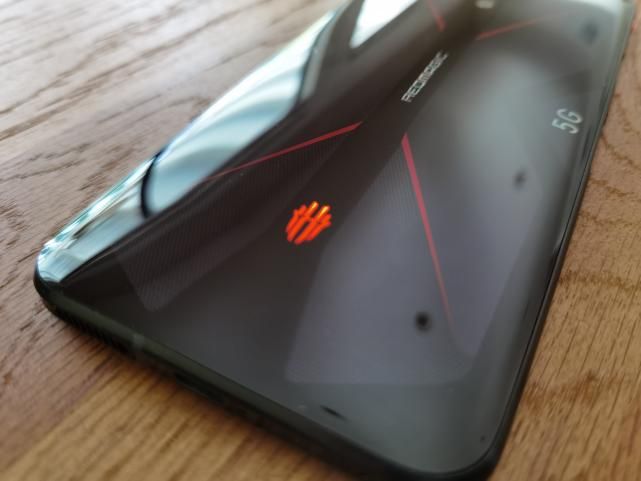
The Red Magic 5G sports a pragmatic, unique style compared to other smartphones. The back is still glass, but instead of a bland gradient, there is a more intricate design that screams out loud the true nature of this phone: this device is focused on gaming, inside and out. There is still sort of a gradient effect on the black variant, but the main design features we mentioned previously are still the most prominent and noticeable. We have very noticeable Red Magic branding below the triple rear camera setup, which features an IMX686 sensor. Other gaming phones have often gone overboard with their “gaming” branding — and the Red Magic 5G appears to take the middle road.

Nubia Red Magic 5G Nubia Red Magic 5G Nubia Red Magic 5G

Upfront, the display doesn’t have any kind of notch or hole-punch camera. Instead, the display features two small bezels on the top and bottom, more similar in fashion to 18:9 phones even though the display is 19.5:9. On a phone like this, it makes sense: any disturbance to the display can disrupt the phone’s gaming experience. The small bezels also help with grip while playing horizontally, so we aren’t complaining.

On the sides of the device, in a similar fashion as other phones: we have the usual power button and volume rockers, but we also have pressure-sensitive shoulder trigger buttons. We’ll talk about these in detail later on, but suffice to say, they do make a difference while playing. There is also a dedicated button for toggling Gaming Mode, needed to kick the fan into power.


Red Magic 5G: Performance

For the performance review, we’re going to open up with 2 sections. First up, we’ve got a “benchmarks” section which will allow us to measure the Red Magic 5G’s might in raw numbers, allowing us to more easily compare how it stacks up against other smartphones. But of course, benchmarks are just a raw indicator and do not necessarily give us an exact picture of how well this phone performs, so an actual gaming performance test will follow.

Benchmarks

We’re testing out three different benchmarking apps for this review: Geekbench 5, PCMark Work 2.0, and 3DMark. We’re comparing the Red Magic 5G against the OnePlus 8 Pro (another Snapdragon 865 smartphone), the Huawei P40 Pro (powered by the Kirin 990 SoC), the Samsung Galaxy S20+ (powered by the Exynos 990), and the older OnePlus 7T based on the Snapdragon 855+ processor. This will allow us to roughly measure how the device stacks up against other high-end smartphones.

The Red Magic 5G has an edge against all the other smartphones in this list, and that is the display’s refresh rate: 144Hz. The OnePlus 8 Pro and the Galaxy S20+ have 120Hz displays, while the P40 Pro and the OnePlus 7T have 90Hz ones. So it will be interesting to see how much of an impact the higher refresh rate display has on overall performance in this situation.

Geekbench 5 (Free, Google Play) →

Geekbench 5 gives us a single-core score of 908 and a multi-core score of 3041. By contrast, the OnePlus 8 Pro, the closest device in this list, performs roughly the same in single-core (897), and does slightly better in the multi-core regard (3339). This could be attributed to things like poorer software optimization on the Nubia, the fact that 144Hz demands a higher CPU load, etc. It does better than other phones in the list though, including the Exynos 990-based Galaxy S20+ and the Kirin 990-based Huawei P40 Pro as well as, evidently, the OnePlus 7T.

PCMark for Android Benchmark (Free, Google Play) →

PCMark gives us a slightly different panorama though, as the phone scores 12891 in the Work 2.0 overall test. The Galaxy S20+ comes in second here at 11962 while all other smartphones in the list perform slightly less than that. Oddly, though, the device manages to score quite a bit more than the OnePlus 8 Pro, which comes with the same system-on-chip.

3DMark - The Gamer's Benchmark (Free, Google Play) →

Lastly, 3DMark Sling Shot tests throw a 7305 figure for the Red Magic 5G, similar to the score in the OnePlus 8 Pro and way ahead of other smartphones such as the P40 Pro, which scores 6058.

Gaming Performance

As for the actual gaming performance section, we tried out 6 different games for this review, all of which are available on the Google Play Store:

  • Real Racing 3
  • PUBG Mobile
  • Bullet Force
  • Gear.Club
  • Dead Trigger 2
  • Vainglory

These are some of the most popular games on the Google Play Store as of right now, which is why we picked them out. The Red Magic 5G has a 1080p resolution, and 1080p games are not that difficult to render by themselves compared to games in 1440p. However, we have a 144Hz display here, which is a first for a phone, so it will be interesting to see how well games run here. And to our surprise, the phone doesn’t disappoint one bit.

Thanks to GameBench for providing us a journalist license. GameBench is a suite of tools for developers to analyze the fluidity, power consumption, and memory usage of games. GameBench is available as an app on Google Play and as a desktop application. For more information, visit GameBench.net

Real Racing 3

Real Racing 3 (To be announced, Google Play) →

Published by Electronic Arts, Real Racing 3 is one of the most popular racing games for Android phones, clocking in at 500 million installs, and as it stands, it is also notably resource-intensive. Yet it is not a problem for the Red Magic 5G which manages to pull off a median of 145 fps, as high as the phone’s display allows, with a stability of 95%, meaning that the game runs smooth as butter most of the time with very rare small frame drops here and there.

PUBG Mobile

PUBG MOBILE - Mad Miramar (Free+, Google Play) →

PUBG Mobile is a game most of you are probably acquainted with: it originally launched on PC and helped popularize the battle royale genre together with Fortnite. It also made its way to Android phones as well. Performance-wise, however, the game runs as good as it can run: it is capped at 60 fps, so it won’t run over that even if the phone allows for it. With a perfect 100% stability, though, frame drops are completely non-existing in this realm.

Bullet Force

Bullet Force (Free+, Google Play) →

Bullet Force is another popular shooter game available on the Google Play Store, clocking in at 10 million installs. While not as popular as other shooters, this one does have an advantage over the others, and it’s the fact that the game can run at the full capabilities of the phone’s 144Hz display. With a median of 145 fps and a stability of 98%, the phone can easily handle the game like no other Android phone can as of now.

Gear.Club

Gear.Club - True Racing (Free+, Google Play) →

Gear.Club is another racing game that is not as popular as alternatives such as Asphalt 9 and Real Racing 3 (which we also tested earlier), but it’s also a game that we wanted to test out for being a tad bit more intensive than Real Racing 3. Despite this, it is still no big task for the Red Magic 5G. This game is, again, capped at 60fps, so we get similar numbers to the ones we saw in PUBG: median 60 fps, 93% stability, which means that frame drops do exist here, but they’re very rare. It would be curious to see how the game runs at the phone’s max framerate.

Dead Trigger 2

DEAD TRIGGER 2 - Zombie Game FPS shooter (Free+, Google Play) →

Dead Trigger 2 is a survival horror game for Android devices and a pretty popular one at that: it has over 110 million installs. It is no match, however, for the Red Magic 5G. The game takes full advantage of the 144Hz display, and again achieves a median of 145 fps and almost-perfect stability of 98%.

Vainglory

Vainglory (Free+, Google Play) →

Lastly, we have Vainglory, which is another popular game that takes advantage of the device’s unparalleled high refresh rate. We get an average of 145 fps with 95% of stability, meaning that it’s running most of the time at full steam.


Red Magic 5G: Camera

On the camera front, the device is far from being the most capable out there, but it still doesn’t disappoint if you need to snap something quickly. Even if you buy this phone specifically for gaming, you’ll want a decent camera. The phone has a 64MP IMX686 sensor as the primary sensor, and it is coupled with a secondary ultra-wide 8MP lens as well as a macro 2MP lens for all your macro shot needs.

Unfortunately, we weren’t able to do as much camera testing as we would’ve wanted to, given how the ongoing COVID-19 pandemic is forcing us all to stay home. But from our limited testing, we’ve found that the Red Magic 5G, while not close to being a camera champion (albeit still pretty decent for its price point), is able to provide an average camera experience given good lighting conditions. It won’t disappoint you too badly, but it won’t blow you off your seat either.

Nubia Red Magic 5G camera samples.

Colors seem as accurate as they go and you may come across some oversaturation in certain shots, but nothing that’s a dealbreaker here. The whole point of the phone isn’t really its camera, after all, but the gaming experience at the forefront.

Selfie needs are served by a single 8MP sensor, which is, again, an average choice that won’t stand out or disappoint. It also has an AI-based portrait mode which is based on face detection and blurs the background behind you.


Red Magic 5G: Battery Life & Charging

The Nubia Red Magic 5G features a 4,500 mAh battery. A battery of this capacity has been able to provide excellent battery life in several smartphones. However, in this case, the Red Magic 5G features a 144Hz display as well as other features such as the dedicated fan which can, and will, sip a bit of battery compared to other conventional smartphones. The OnePlus 8 Pro, for instance, features a very similar battery capacity, at 4,510 mAh to be precise, and it has been proven that using the phone in 120Hz mode has taken a toll in battery life. Our results in this regard have been kind of a mixed bag as well, as 5G connectivity can also sip battery.

If battery life is insufficient though, the phone supports ultra-fast charging: it supports blazing-fast 55W charging (the 55W fast charger is sold separately). We weren’t able to test out the fast charger since it’s sold separately, but it should be able to top up the phone’s battery in record-breaking times. Out of the box, the Nubia Red Magic 5G comes with an 18W charger but also supports Qualcomm Quick Charge 4+ (27W) charging if you have a supported charging cable and adapter. In our testing, we found that it takes approximately 1 hour and 26 minutes to charge the Red Magic 5G from 0 to 100% using the included 18W charger.

Red Magic 5G included 18W charger

To test the real-world battery life, we used PCMark’s Work 2.0 battery life benchmark. PCMark’s Work 2.0 battery benchmark iterates the standard Work 2.0 benchmark (which runs the device through a serious of tasks that simulate real-world activities like web browsing, image editing, or document reading). Unfortunately, we kept getting an error that didn’t let the benchmark run to completion (ie. from 100% down to 0%). When the test did end by itself, however, our device’s battery life was left at 18% after 8 hours and 38 minutes of the test running. This was at a brightness level that was at about half of the maximum, so we can expect the Red Magic 5G to last a decent while in day-to-day use.

But what about the battery life while gaming? To test that, we used GFXBench’s Manhattan battery life benchmark, which runs the device through multiple iterations of the Manhattan 3.1 OpenGLES 3.1 test, a graphically intensive benchmark. When the test ended, GFXBench estimates our Red Magic 5G will last 177.4 minutes of continuous playtime. Of course, Manhattan 3.1 isn’t a real game, so this number is just an estimate of how long the device should last while continuously playing a super graphically intensive game.

Nubia Red Magic 5G PCMark 2.0 battery life test Nubia Red Magic 5G GFXBench battery test

Furthermore, the detailed GFXBench results show that the Red Magic 5G barely throttled. In fact, the Manhattan 3.1 scores throughout the 30 iterations of the test only fluctuated from 4498-4523. We can see that the battery temperature increased from ~33°C to about ~49°C. Lastly, we should note that GFXBench automatically sets the brightness to maximum (100%), so that 177 minutes of playtime means you should get nearly 3 hours of gameplay at the phone’s maximum brightness. Max brightness is a bit much for many users, though, so you can expect to get even longer playtimes just by decreasing the brightness.

GFXBench Manhattan 3.1 detailed results Nubia Red Magic 5G

Detailed performance and battery temperature over time results from GFXBench’s Manhattan 3.1 battery benchmark.

(We also ran the GFXBench Manhattan 3.1 OpenGLES battery benchmark test with gaming mode on. While the final battery life result didn’t improve much—GFXBench thinks the phone will last 179.7 minutes, a 2.3 minute improvement—the performance fluctuated a bit less and the maximum battery temperature it reached was a bit lower, topping out at ~45°C with the fan running instead of ~49°C without. Using a temperature reader, we also measured the final surface temperature of the device after GFXBench completed and found the temperature to be near ~46°C.)

GFXBench Benchmark (Free, Google Play) →


5G connectivity

Of course, the phone has a Snapdragon 865 processor, and as such, one of the headlining features we’re seeing here is support for 5G connectivity. This 5G connectivity is, however, not really useful for users in the US. It doesn’t provide extensive coverage for most network bands used in the US, and 5G ones are mostly out of question as well. Your mileage may vary on Asian/European markets, where you might do a little better.


Extras

Amongst the phone’s most exciting features aimed at gamers, you’ll be able to find “shoulder triggers,” which are touch-sensitive buttons you can find on the sides of the phone that take your gaming experience to another level. These shoulder triggers allow for easier access to the furthest edges of your screen without making you go through the awkward reach that tends to happen when playing on phones with a screen as big as the one in the Red Magic 5G.

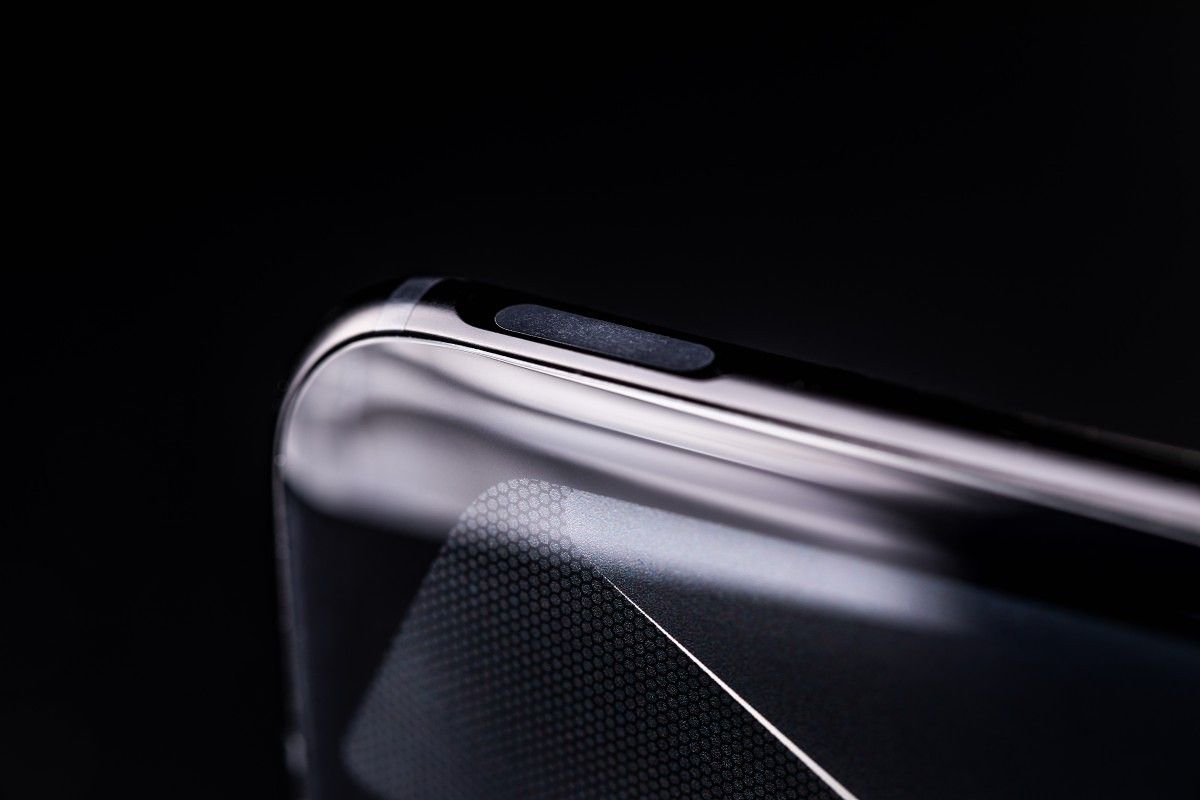
The Red Magic 5G’s shoulder triggers in closer detail.

Whilst in the phone’s Game Space 2.1, you’ll be able to customize the way these buttons work for every game you play. For example, while playing Call of Duty: Mobile, you can make them act like the L2 and R2 buttons of the PlayStation 4’s DualShock 4 controller to point and shoot. This is easily a feature that’ll make your gaming experience better as these shoulder triggers replace the on-screen buttons on certain games allowing for a smoother experience.

Another one of the features you can find on the Nubia Red Magic 5G is the third generation of Nubia’s Turbo Fan technology which integrates an internal fan and an advanced liquid cooling system that tries to maintain the phone on an adequate temperature most of the time. Within the Game Space 2.1, you could decide to turn the fan on or off, albeit it’s off by default.

The Red Magic 5G’s internal fan sits to the left of the phone.

The results we’ve found while checking out this feature are… lukewarm, for lack of a better word. When the phone is running hot, enabling it doesn’t really help make the phone any cooler. Turning it on before putting strain on the phone, however, helps to slow down the increase in temperature. The phone’s thermal performance, as well as the effectiveness of the Turbo Fan, can be affected by several factors, such as the environment and the ambient temperature. While, in function, it’s little more than a gimmick, it may help out for extended gameplay periods to avoid the phone from getting hot quickly.


Conclusion

The Red Magic 5G is a phone that, at its core, is meant to serve a narrow market: hardcore gamers that want to squeeze the maximum performance possible out of a device. This is not your average flagship phone: while some features included in this device could very well make their way to other consumer smartphones and serve a purpose, such as the 144Hz display, it may not sit as well with more casual customers: the cameras are average at most, not everyone could like the phone’s design, and the display has visible bezels. Plus, most of these gaming features could also be just gimmicks to sp,e users. If you care about any of these things, then you should probably look away from this phone.

If, however, your priority is performance and using the most out of your device, then this is a splendid smartphone. It’s got a Snapdragon 865, so you get the best performance in the market right now. It has up to 16 GB of RAM and 256 GB of storage, so it will be able to handle everything you throw at it, and it has plenty of features that can greatly enhance your gaming experience. After all, this phone’s entire existence revolves around gaming. The shoulder triggers are greatly useful for several games where a touch interface may not sit as well, such as Fortnite and Call of Duty: Mobile. The integrated fan is better on a spec sheet than in real life, but if you use it correctly, it can help keep high temperatures at bay for longer.

Red Magic 5G Forums

Buy the Red Magic 5G from RedMagic.gg

If you’re a hardcore gamer looking for a phone that can keep up with you, then this is probably worth checking out.

Written with many inputs from Arol Wright and Mishaal Rahman.

The post Red Magic 5G Gaming Review: Smartphone Gaming has Never Looked Smoother appeared first on xda-developers.


from xda-developers https://ift.tt/2Xal4ss
via IFTTT

mercredi 27 mai 2020

COVID-19 Contact Tracing apps: India’s Aarogya Setu goes open source, while Sweden and Italy test Google/Apple’s Exposure Notification API

The novel coronavirus, also known as SARS-CoV-2, has wreaked havoc across the world. A few nations have managed to control the spread of the virus, but many others have struggled and are still trying their best to contain it. One of the strategies being tested for its containment is contact tracing, ie. tracing all the people who have recently come into contact with a person who has tested positive for COVID-19 and then undertaking steps to isolate these individuals. Contact tracing is a crucial task to get right as it impacts an individual’s privacy and liberty in the greater interest of public health. The threat to personal privacy was big enough for Google and Apple to come together and collaborate on a contact tracing API and Bluetooth spec, one that is designed to have minimal impact on user privacy and security. While these efforts are commendable and some countries have adopted these, a fair few nations have also undertaken work on their own similar solutions. In this piece, we attempt to list some of these contact tracing solutions, with a focus on those that have their source code open and available to the public for inspection and feedback.

Independent Solutions

Austria — Stopp Corona

The Austrian government adopted the Stopp Corona app developed in conjunction with the Austrian Red Cross. This app does not rely on Google and Apple’s Exposure Notification APIs. There is no location tracking in place, as the app uses Bluetooth. The app monitors the phones that have come near the user. If a user suspects COVID-19 infection or has been positively diagnosed with it, the proximity information is uploaded to what is claimed to be a decentralized database. Alerts are sent out to all users who have had proximity history. Reportedly, there is no personal information collected, and if a user wants to opt-out of tracking, they can simply delete the app and the data. For further peace of mind, the app is open source too.

Stopp Corona Source Code on GitHub

Stopp Corona (To be announced, Google Play) →


Australia — COVIDSafe

Australia has adopted the COVIDSafe app. This app does not rely on Google and Apple’s Exposure Notification APIs. Upon installation, users need to register their name/pseudonym, age range, postcode, and phone number, all of which are stored encrypted on a government server. The app relies on Bluetooth for proximity tracking, exchanging anonymized IDs that are changed every two hours. These IDs are stored encrypted on phones and deleted after 21 days. When someone tests positive for COVID-19, they receive a unique code from health officials that then uploads the list of anonymized IDs for the past 21 days. The app is open-source too, so transparency is maintained.

COVIDSafe Source Code on GitHub

COVIDSafe (To be announced, Google Play) →


Czech Republic — eRouska

Czech Republic has adopted the eRouska app. This app does not rely on Google and Apple’s Exposure Notification APIs. Similar to other implementations that are Bluetooth-only, eRouska scans the area for other eRouska app users in proximity and saves encounter data locally on the device. When a user tests positive, the user is contacted by health officials to upload the encounter data consensually. The broadcasted Device ID changes every hour, and scanning can also be manually toggled on and off. Users can opt to remove all of their collected data, including the phone number. The app is open-source, too.

eRouska Source Code on GitHub

eRouška - part of smart quarantine (Free, Google Play) →


India — Aarogya Setu

The Government of India decided to not adopt Google and Apple’s solution but instead develop its own solution in the form of the Aarogya Setu app. Once a user sets up their account on the application, the app asks for continued Bluetooth access and location data. Users also need to provide information such as name, age, gender, health status, and more, to build up a user profile. A self-assessment test is put forward where the user is asked whether they are showing any of the symptoms of COVID-19 along with other questions. When two smartphones with the Aarogya Setu app come close to each other, the app collects information. If one of the contacts has tested positive, the app will alert the other person and provide instructions to help in self-isolation.

The use of this Aarogya Setu app was first heavily encouraged by the government and then mandated in several instances. However, India does not have the best attitude towards citizen privacy as the country lacks key laws to regulate such use-cases. Since the app collects location data and shares it with the government—an approach that many have deemed excessive and unnecessary—it came under the spotlight for being too intrusive on user privacy and for having no transparency and accountability in the process. What followed was criticism of these approaches.

In some good news on this end, the Aarogya Setu app for Android has been made open source. The source code for the Android app is now available on GitHub. Concerned authorities promise that the source code for the iOS version and the KaiOS version of the app will also be open-sourced “in due time“. The privacy policy of the app was also updated to allow for reverse-engineering the app and reporting bugs to the government. Further, there is also a bug bounty program in place, inviting developers to identify vulnerabilities, bugs, and code improvements.

Aarogya Setu Source Code on GitHub

All of this is definitely good news since the lack of transparency was rather alarming. There are still questions on the opaque back-end infrastructure and server-side code, but reports suggest that this, too, will be open-sourced next week.

Aarogya Setu (Free, Google Play) →


Singapore — TraceTogether based on BlueTrace Protocol

Singapore’s implementation takes the form of TraceTogether, which is also not reliant on Google and Apple’s Exposure Notification APIs but is also Bluetooth-only and not location-based. The app only needs a mobile number to initiate, and no other personal information is collected. The number forms part of the user ID, which is then used to generate temporary IDs. Proximity information on these temporary IDs is stored on a 21-day rolling basis on-device. Data is relayed to a server when a user tests positive. Further, TraceTogether’s functionality is promised to be suspended when the pandemic situation subsides.

While TraceTogether is not open source by itself, a generic codebase has been published in the form of OpenTrace. This generic codebase comprises the reference implementation of an Android app, an iOS app, and a central server built around Google Firebase. Also published is the BlueTrace protocol which forms the basis for both TraceTogether and OpenTrace. The BlueTrace protocol attempts to create interoperability across jurisdictions so that other nations can collaborate on these efforts.

OpenTrace Source Code on GitHub

TraceTogether (Free, Google Play) →


UK — NHS COVID-19

The United Kingdom’s implementation takes the form of the NHS COVID-19 app, which is currently in “beta testing” and available to residents within the Isle of Wight (and to be expanded to other regions in the future). The app is not reliant on Google and Apple’s Exposure Notification APIs but also relies on Bluetooth. Upon setup, users are asked to enter the first half of their pin code, which is used to identify if there are hotspots breaking out—further details are not asked unless you report symptoms. Bluetooth proximity data is logged for 28 days through anonymous IDs. The app will also be discontinued once the pandemic situation is over. The source code of the app is already open and available for inspection.

NHS COVID-19 Source Code on GitHub

NHS COVID-19 – Isle of Wight residents only (Free, Google Play) →


Solutions using Google and Apple’s Exposure Notification API

These implementations are built on top of Google and Apple’s Exposure Notification API. Google has also rolled out an update to Google Play Services that includes the new API. A reference design for an Android app implementing the Exposure Notifications API is also available. Apps based on this API are prohibited from collecting device location data. Instead, the API utilizes Bluetooth Low Energy to detect if you have been in the vicinity of others who have tested positive. The API will share how many days have passed since an individual “contact event” alongside an estimate of exposure time. Bluetooth metadata will be AES encrypted.

While in the case of Google, Android users will not need to install an application as the Exposure Notification API is being delivered through updates to Google Play Services. So as long as you have an Android device running Android 6.0 Marshmallow or later, you should have access to the service. Still, Google will prompt users to download a relevant public health app if a positive contact event has been detected.

Italy — Immuni

Italy’s solution comes in the form of the Immuni app, which is expected to see a broader public release in the coming days. It relies on Google and Apple’s exposure notification system, leveraging Bluetooth Low Energy, and no geolocation data is collected whatsoever.

Immuni Source Code on GitHub

Switzerland — SwissCovid DP-3T

Switzerland is working on a solution called Decentralised Privacy-Preserving Proximity Tracing (DP-3T). The app and server are both expected to be open-source. The app is not yet complete and released to the public, but the source code for the app is already live, so it should serve as a foundation.

SwissCovid DP-3T Source Code on GitHub


This is not an exhaustive list but meant to highlight the solutions that are available in the form of open-sourced code for interested developers to inspect and build upon.

The post COVID-19 Contact Tracing apps: India’s Aarogya Setu goes open source, while Sweden and Italy test Google/Apple’s Exposure Notification API appeared first on xda-developers.


from xda-developers https://ift.tt/3c9WYSM
via IFTTT

Google Stadia adds Jotun and Sundered, announces Elder Scrolls Online launch date, and rolls out 1440p streaming

It’s increasingly looking like cloud game streaming services are here to stay. These services are useful ways to enjoy the latest games for those who don’t have, can’t buy, or won’t buy gaming hardware, whether we’re talking about consoles or high-end PCs. Google Stadia is one of the leading cloud gaming services, and Google seems to be fully invested in growing this service. Now, the company is adding more titles and features to Stadia as they have announced in their latest blog post.

Jotun: Valhalla Edition & Sundered: Eldritch Edition on Google Stadia

One of Stadia’s biggest shortcomings is the fact that it doesn’t yet have a vast selection of games, but that list keeps expanding with new announcements practically every week. Yesterday, Google announced that 2 more titles are now available for sale. Jotun: Valhalla Edition takes players to the world of Norse mythology as they claim their place in the pantheon of heroes while the 2D platformer Sundered: Eldrich Edition features amazing visuals and equally amazing challenges. Both games are available for purchase on Stadia right now ($14.99 for Jotun and $19.99 for Sundered).

The Elder Scrolls Online Launch Date, and More

If you’re a fan of The Elder Scrolls series and online MMOs are your thing, then you might be glad to know that the online installment The Elder Scrolls Online is landing on Stadia on June 16th and will become available for free for Stadia Pro subscribers. The game will feature support for crossplay with PC players and will also allow you to get the Morrowind chapter as free content.

Among other content options coming soon, the “Hobbies” DLC for The Crew 2 is also landing for the Stadia version tomorrow, the new Aftermath expansion for Mortal Kombat 11 is now available for purchase on Stadia, and PUBG is adding Ranked Mode for more competitive gameplay (though only if you’re using a controller). The Crew 2 costs $49.99 on Stadia though the “Hobbies” update will arrive for free, while Mortal Kombat 11: Aftermath costs $39.99.


Finally, desktop Chrome users will be glad to know that they will be able to play Google Stadia games at 1440p resolution now, so long as they meet all the requirements for 1440p/4K gaming (like having a 1440p or 4K monitor, obviously) and their Internet connection allows for it. Previously, this was capped at 1080p, so it’s good to know that we’re getting more options.

The post Google Stadia adds Jotun and Sundered, announces Elder Scrolls Online launch date, and rolls out 1440p streaming appeared first on xda-developers.


from xda-developers https://ift.tt/2B87gWU
via IFTTT

Google announces Firebase Live and Web.dev Live virtual events for developers

With practically every in-person event has been canceled this summer, Google is announcing a couple of virtual events. These developer-focused events will be for Firebase and Chrome web.dev, held this June and July. Here’s what you need to know:

  • Firebase Live (June 9th – July 7th): A 5-part weekly web series for developers consisting of talks, technical tutorials, and live Q&As to help increase developer productivity and collaboration.

  • Chrome Web.dev Live (June 30th – July 2nd): a three-day digital event for web developers to learn more about the latest news and techniques across web development.

Firebase Live will be held each Tuesday at 9:30 AM PST. Here’s the weekly topic schedule:

  • 6/09: Unit testing Security Rules with the new Firebase Emulator Suite
  • 6/16: The Local Firebase Emulator UI in 15 minutes
  • 6/23: Developer’s Guide to Google Analytics
  • 6/30: Sign in with Apple using Firebase Authentication
  • 7/07: Getting Started with Google Analytics for Firebase in Unity

Chrome Web.dev Live will be held during three different time zones so questions can be answered in real-time from a variety of regions. Each day, the 3-hour stream will take place at these times:

  • June 30th, 9am – 12pm PDT (Optimized for developers in the Americas)
  • July 1st, 12pm – 3pm GMT (Optimized for developers in Europe & Africa)
  • July 2nd, 1pm – 4pm IST (Optimized for developers in Asia & Australia)

Head on over to the Firebase Live event page to sign up for updates. You can also head over to the Web.dev Live event page for updates. It’s a bummer than many of these events can’t be held in person, but at least Google is making the best of the situation with virtual events.


Source 1: Firebase Blog | Source 2: Chromium Blog

The post Google announces Firebase Live and Web.dev Live virtual events for developers appeared first on xda-developers.


from xda-developers https://ift.tt/2XzfrTD
via IFTTT

[Update 2: Sales delayed] OnePlus 8 and OnePlus 8 Pro launched in India, starting at ₹41,999 ($549)

Update 2 (05/27/2020 @ 11:16 AM ET): OnePlus has delayed the availability of the OnePlus 8 and OnePlus 8 Pro in India.

Update 1 (05/14/2020 @ 01:48 AM ET): OnePlus has shared availability details for the OnePlus 8 and OnePlus 8 Pro in India. Scroll to the bottom for more information. The article as published on April 19, 2020, is preserved below.

After months of leaks and teasers, OnePlus finally launched the OnePlus 8 series earlier this month. However, unlike previous years, the company didn’t launch the OnePlus 8 series in India and China at the same time as the global launch. While OnePlus launched the devices in China just a day after the global launch, the company has now finally gotten around to launching the OnePlus 8, OnePlus 8 Pro, and OnePlus Bullets Wireless Z in India.

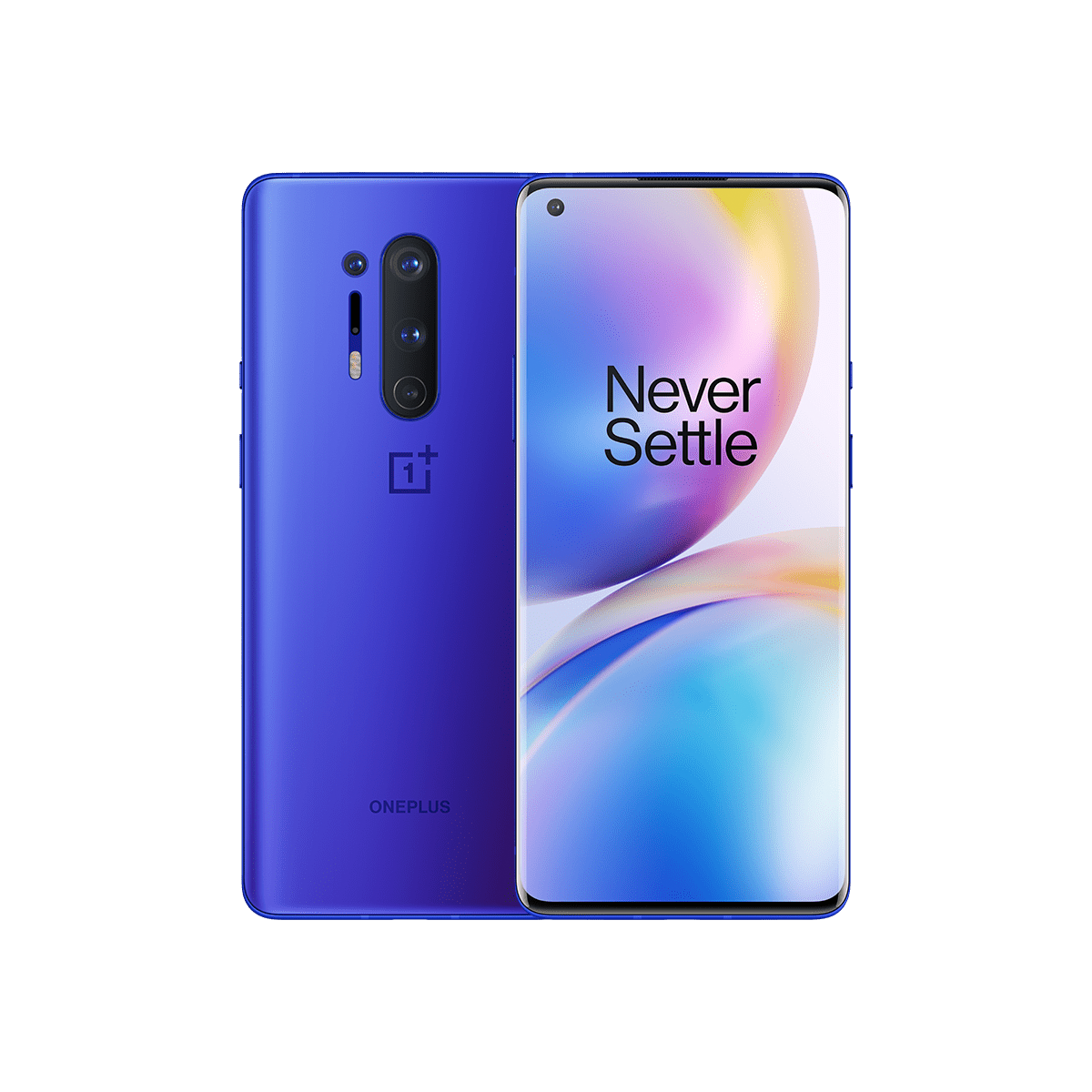
OnePlus 8 OnePlus 8 Pro

OnePlus 8 XDA Forums || OnePlus 8 Pro XDA Forums

OnePlus 8 Series Specifications

Full Specification Table

Specification OnePlus 8 OnePlus 8 Pro
Dimensions & Weight
  • 160.2 x 72.9 x 8.0 mm
  • 180g
  • 165.3 x 74.35 x 8.5 mm
  • 199g
Colors, Materials, Finish
  • Onyx Black (glossy)
  • Glacial Green (matte-frosted)
  • Interstellar Glow (glossy)
  • Polar Silver
  • Onyx Black (glossy)
  • Glacial Green (matte-frosted)
  • Ultramarine Blue (matte-frosted)
Display
  • 6.55″ Fluid AMOLED, single hole-punch (3.8mm) cutout
  • FHD+ resolution (2400 x 1080), 20:9 aspect ratio, 402ppi
  • 90Hz refresh rate, 180Hz touch sampling rate
  • HDR10+
  • 3D Corning Gorilla Glass
  • Features
    • Vibrant Color Effect
    • Reading Mode
    • Night Mode
  • No Active Digitizer for Active Pen support
  • 6.78″ Fluid AMOLED, single hole-punch (3.8mm) cutout
  • QHD+ resolution (3168 x 1440), 19.8:9 aspect ratio, 513ppi
  • 120Hz refresh rate, 240Hz touch sampling rate
  • HDR10+
  • 1300 nits peak brightness, 4096 levels of adjustment
  • 3D Corning Gorilla Glass
  • Features
    • Vibrant Color Effect
    • Reading Mode
    • Night Mode
    • MEMC
    • HDR Boost
    • Adaptive Display
  • No Active Digitizer for Active Pen support
Cameras (Rear)
  • Primary
    • 48MP Sony IMX586, f/1.75, 0.8µm pixels, OIS, EIS
  • Secondary
    • 16MP, ultra-wide-angle, f/2.2, 116° FOV
  • Tertiary
    • 2MP, macro, f/2.4, 1.75µm pixels
  • Flash
    • Dual LED Flash
  • Autofocus
    • PDAF + CAF
  • Video
    • 4K @ 30/60 fps
    • 1080p @ 30/60 fps
    • Slow Motion
      • 1080p @ 240 fps
      • 720p @ 480 fps
    • Time Lapse
      • 4K @ 30 fps
      • 1080p @ 30 fps
    • Miscellaneous features
      • CINE aspect ratio
      • Ultra Steady at 4K @ 30 fps
  • Other sensors
    • Flicker ambient light sensor (front)
  • Primary
    • 48MP Sony IMX689, f/1.7, 1.12µm pixels/48MP; 2.24µm [4 in 1]/12MP, OIS, EIS
  • Secondary
    • 48MP, ultra-wide-angle, f/2.2, 119.7° FOV
  • Tertiary
    • 8MP, telephoto, f/2.4, 1.0µm pixels, OIS, 3x Optical Hybrid Zoom
  • Quaternary
    • 5MP, color filter, f/2.4
  • Flash
    • Dual LED Flash
  • Autofocus
    • All pixel omni-directional PDAF+CAF+LAF
  • Video
    • 4K @ 30/60 fps
    • 1080p @ 30/60 fps
    • Slow Motion
      • 1080p @ 240 fps
      • 720p @ 480 fps
    • Time Lapse
      • 4K @ 30 fps
      • 1080p @ 30 fps
    • Miscellaneous features
      • HDR Video, CINE aspect ratio
      • Ultra Steady at 4K @ 30 fps
      • Audio Zoom
      • Audio 3D
      • Audio Windscreen
      • Color Filter Camera
  • Other sensors
    • Flicker ambient light sensor (front and back)
    • Laser sensor
    • Front RGB sensor
Camera (Front) 16MP Sony IMX471, f/2.0, 1.0µm pixels, fixed focus, EIS, 1080p@30fps 16MP Sony IMX471, f/2.45, 1.0µm pixels, fixed focus, EIS, 1080p@30fps
Software OxygenOS 10 based on Android 10

2 years of software updates (Android 11 and Android 12 planned), 3 years of bi-monthly security updates

A/B partitions for Seamless Updates

System-on-chip Qualcomm Snapdragon 865 CPU

1x Kryo 585 (ARM Cortex-A77-based) Prime core @ 2.84GHz
3x Kryo 585 (ARM Cortex-A77-based) Performance core @ 2.4GHz
4x Kryo 385 (ARM Cortex A55-based) Efficiency cores @ 1.8GHz

Adreno 650 GPU

RAM 8/12GB LPDDR4X 8/12GB LPDDR5
Storage 128/256 GB UFS 3.0+ Dual-Lane
Battery 4300 mAh 4510 mAh
Wired Charging 30W Warp Charge 30T (5V/6A)

15W USB-C Power Delivery (5V/3A)

Wireless Charging No Warp Charge 30 Wireless (30W), 10W Qi EPP

Reverse Wireless Charging (3W)

IP Rating No IP68
Security

Optical under-display fingerprint scanner

Software-based facial recognition

Ports & Buttons

USB 3.1 (Gen 1) Type-C with video out (DisplayPort Alternate Mode)

Alert Slider

Dual nano-SIM slot*

*Second SIM will be activated in a post-launch update

Audio & Vibration Dual stereo speakers. Audio tuned by Dolby Atmos.

X-axis linear motor

Multimedia Codec Support

Audio Playback: MP3, AAC, AAC+, WMA, AMR-NB, AMR-WB, WAV, FLAC, APE, OGG, MIDI, M4A, IMY, AC3, EAC3, EAC3-JOC, AC4

Audio Recording: WAV, AAC, AMR

Video Playback: MKV, MOV, MP4, H.265(HEVC), AVI, WMV, TS, 3GP, FLV, WEBM

Video Recording: MP4

Image Viewing: JPEG, PNG, BMP, GIF, WEBP, HEIF, HEIC, RAW

Image Output: JPEG, PNG

Connectivity
  • Qualcomm Snapdragon X55 modem + Qualcomm FastConnect 6800
  • Wi-Fi: 2×2 MIMO, 802.11 a/b/g/n/ac/ax, 2.4GHz/5GHz
  • Bluetooth: Bluetooth 5.1, with Qualcomm aptX, Qualcomm aptX HD, LDAC and AAC
  • NFC: Yes
  • Positioning: GPS (L1+L5 dual-band), GLONASS, BeiDou, Galileo (E1+E5a dual-band), SBAS, A-GPS
  • LTE/LTE-A:
    • 4x4MIMO
    • Supports up to DL Cat 18 (1.2Gbps)/UL Cat 13 (150Mbps) depending on carrier.
  • Bands (NA)
    • 5G NSA: n2, n5, n66, n71, n41
    • 5G SA: n71, n41
    • MIMO-LTE: B2, 4, 7, 25, 66, 41, 48
    • NR: n2, n66, n41
    • FDD-LTE: B1, 2, 3, 4, 5, 7, 8, 12, 13, 17, 18, 19, 20, 25, 26, 28, 29, 30, 66, 71
    • TDD-LTE: B34, 38, 39, 40 (Roaming), 41, 46, 48
    • GSM: 850, 900, 1800, 1900
    • WCDMA: B1, B2, B4, B5, B8, B9, B19
    • CDMA: BC0, BC1, BC10
  • Bands (IN)
    • 5G NSA: n78
    • 5G SA: n78
    • MIMO-LTE: B1, 3, 41, 40
    • NR: n78
    • FDD-LTE: B1, 2, 3, 4, 5, 7, 8, 12, 17, 18, 19, 20, 26
    • TDD-LTE: B34, 38, 39, 40, 41, 46
    • WCDMA: B1, B2, B4, B8, B9, B19
    • CDMA: BC0 (Roaming)
    • GSM: 850, 900, 1800, 1900
  • Bands (EU)
    • 5G NSA: n1, n3, n28, n78
    • 5G SA: n78
    • MIMO-LTE: B1, 3, 7, 38, 40, 41
    • NR: n1, n3, n7, n78
    • FDD-LTE: B1, 2, 3, 4, 5, 7, 8, 12, 13, 17, 18, 19, 20, 25, 26, 28, 32, 66
    • TDD-LTE: B34, 38, 39, 40, 41, 42, 46
    • WCDMA: B1, B2, B4, B5, B8, B9, B19
    • CDMA: BC0
    • GSM: 850, 900, 1800, 1900

Indian Pricing

India is currently in the middle of a lockdown because of COVID-19, because of which, many OEMs have had to shelve their plans. Nonetheless, the company is going ahead with a price reveal.

OnePlus 8 OnePlus 8 Pro OnePlus Bullets Wireless Z

The OnePlus 8 series will be available in the following RAM and storage variants at the below-mentioned prices:

  • OnePlus 8:
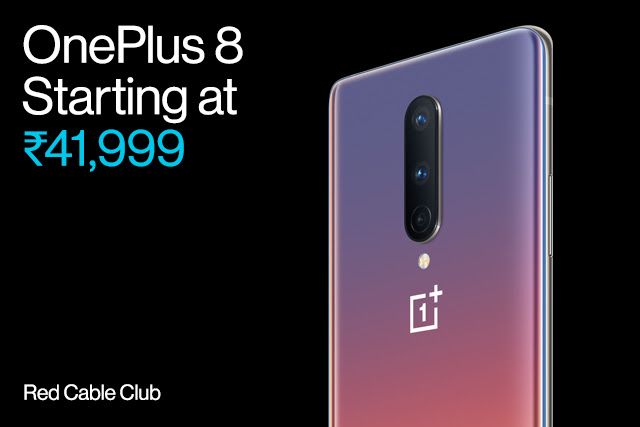
    • 6GB + 128GB: ₹41,999 (Amazon.in exclusive) (Glacial Green)
    • 8GB + 128GB: ₹44,999 (Onyx Black, Glacial Green)
    • 12GB + 256GB: ₹49,999 (Onyx Black, Glacial Green, Interstellar Glow)
  • OnePlus 8 Pro:
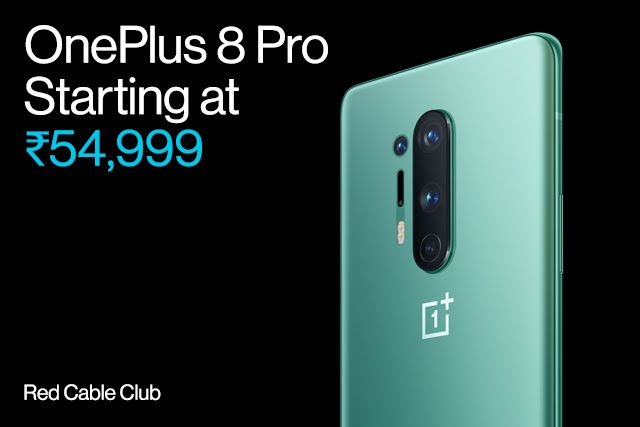
    • 8GB + 128GB: ₹54,999 (Onyx Black, Glacial Green)
    • 12GB + 256GB: ₹59,999 (Onyx Black, Glacial Green, Ultramarine Blue)
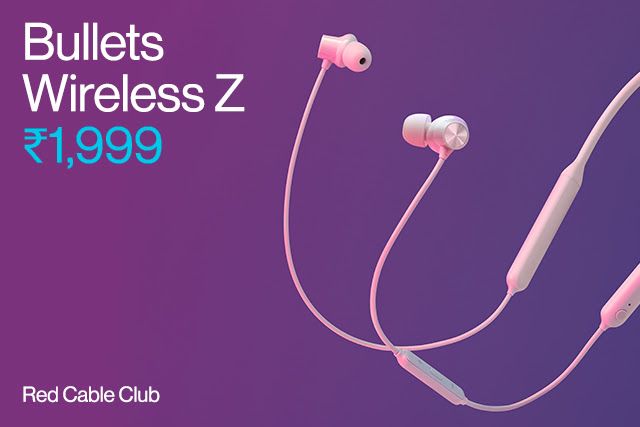
  • OnePlus Bullets Wireless Z: ₹1,999 (Black, Blue, Mint, Oat)

XDA Review: OnePlus 8 || OnePlus 8 Pro

Interestingly, India gets a lower RAM variant and an even lower starting price point ($549). Even the matching variants are priced lower in India. For instance, the starting 8GB + 128GB variant of the OnePlus 8 costs ~$588, which is a good ~$100 cheaper than the US pricing of $699. Similarly, the OnePlus 8 Pro’s 12GB + 256GB variant costs ~$785, which is a far cry from the $999 price tag for the top variant. Even the OnePlus Bullets Wireless Z is half the price. Keep in mind that the Indian variant lacks some 5G bands, which is a non-issue for India because the country does not have 5G anyway.

The phones and accessories will be available across all online and offline channels when the sale is made possible in India in line with the government’s COVID-19 advisories.

Here is the complete price chart for major markets:

Device USD UK EU India
OnePlus 8 – 6GB RAM + 128GB storage: Glacial Green ₹41,999 (~$549)
OnePlus 8 – 8GB RAM + 128GB storage: Onyx Black, Glacial Green $699 £599 €699 ₹44,999 (~$589)
OnePlus 8 – 12GB RAM + 256GB storage: Interstellar Glow $799 £699 €799 ₹49,999 (~$654)
OnePlus 8 – 12GB RAM + 256GB storage: Onyx Black, Glacial Green ₹49,999 (~$654)
OnePlus 8 – 8GB RAM + 128GB storage: Polar Silver* $799
OnePlus 8 Pro – 8GB RAM + 128GB storage: Glacial Green, Onyx Black $899 £799 €899 ₹54,999 (~$719)
OnePlus 8 Pro – 12GB RAM + 256GB storage: Glacial Green, Onyx Black ₹59,999 (~$785)
OnePlus 8 Pro Ultramarine Blue (12GB RAM + 256GB storage) $999 £899 €999 ₹59,999 (~$785)

*Exclusive to Verizon Wireless in the U.S.


Update: OnePlus 8 and OnePlus 8 Pro availability in India

The OnePlus 8 and OnePlus 8 Pro will be available on open sale in India on May 29, 2020 across Amazon.in, oneplus.in, and select OnePlus exclusive offline stores and partner outlets. The OnePlus 8 will also be made available in limited quantities in a special early access sale on Amazon.in on May 18, 2020, at 2 pm IST. The phones are currently available for pre-booking on Amazon.in.

Pre-book OnePlus 8 series on Amazon.in and get ₹1,000 cashback

In addition to the pre-booking offer, there are a few launch offers as well. Customers using an SBI Credit Card can get an instant discount of ₹2,000 and ₹3,000 on the OnePlus 8 and OnePlus 8 Pro respectively. No-cost EMI options are also available across all channels on popular bank debit and credit cards. Reliance Jio users will also be getting ₹150 off on 40 prepaid recharges of ₹349, making it a good deal for their continued data usage.

OnePlus is also offering a Limited Edition pop-up bundle, which will include the device along with a Bullets Wireless Z (Black) earphones, a Cyan Bumper case, and a Karbon Bumper Case at an additional ₹1,000 above the retail price of just the device. The pop-up bundle is available on an invite-only basis for Red Cable Club members initially and will be opened up on select channels later on. Red Cable Club members also get a few other discounts, such as on extended warranty, battery replacement, and assured buyback protection.


Update 2: Open sales delayed

The open sales for the OnePlus 8 and OnePlus 8 Pro in India were scheduled for May 29, 2020. Unfortunately, OnePlus has now announced that the open sales for the devices have now been postponed indefinitely.

OnePlus 8 Pro Sales in India

The announcement post mentions that production was temporarily halted. The reason has not been specified, but external sources suggest it is because of workers testing positive for COVID-19 at the assembling facility. The OnePlus 8 and OnePlus 8 Pro for the Indian region are assembled in India, which is the reason why they are priced competitively, relatively speaking.

Production for the devices is back up and running, but the delay has altered the sales plan. Consequently, the devices will not go on open sale on the mentioned date. Instead, the OnePlus 8 will be available in very limited quantity on the date. Further information on the open sales schedule will be communicated soon.

The post [Update 2: Sales delayed] OnePlus 8 and OnePlus 8 Pro launched in India, starting at ₹41,999 ($549) appeared first on xda-developers.


from xda-developers https://ift.tt/2KjunyW
via IFTTT

This $40 Kit Is Loaded with Protective Gear for Going Back Outside

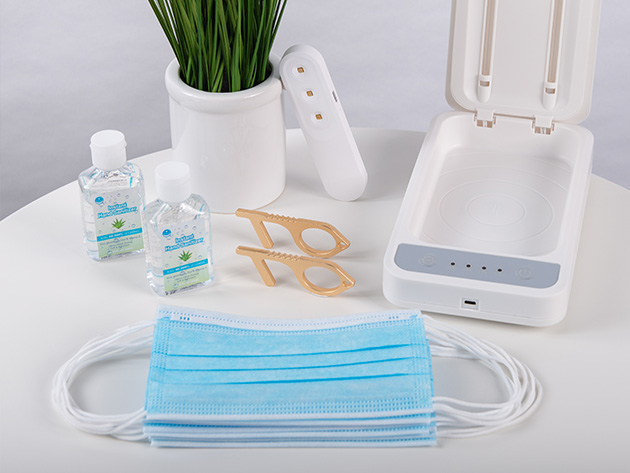
When you can’t see your enemy, your defense is doubly important. In the case of coronavirus, this means stocking up on protective equipment. Many of these products are running low in the shops, but there is another way to acquire the essential gear. The Shelter-In-Place Protective Care Bundle contains hand sanitizer, protective masks, and tools that help you interact with the world safely. You can get the Starter version now for just $39.99 at the XDA Developers Depot.

Although many states are starting to open, there are still over 1.5 million confirmed cases in the country. Whenever you go out, there is a chance you could touch the same surfaces as someone who is infected. This bundle helps you avoid these risks and comply with local laws.

First up, you get a 10-pack of FDA-registered masks. With triple-layer filtration, they provide excellent protection. They also have comfortable ear loops, meaning you can happily wear your mask all day.

To keep your hands clean, the bundle includes a two-pack of 2oz hand sanitizers. Made with active ingredients, the liquid kills 99.99% of germs and bacteria.

You also get two Safe “Touch N Go” Keys. These aluminum tools allow you to push buttons, open doors, and operate switches without touching surfaces directly.

It’s worth $79.95, but you can get the bundle now for $39.99.

 
Shelter-In-Place Protective Care Bundle (Starter) – $39.99

See Deal

Prices subject to change 

More from the XDA Developers Depot

The post This $40 Kit Is Loaded with Protective Gear for Going Back Outside appeared first on xda-developers.


from xda-developers https://ift.tt/36yqtfY
via IFTTT

[Update: Official] Samsung is planning to offer a debit card this summer

Update (5/27/20 @ 9:55 AM ET): The Samsung Money debit card is now official and the company has shared more information about it.

Samsung is the latest tech company looking to get into the personal finance game. According to Samsung, the company is planning to introduce a debit card for Samsung Pay this summer. The card will be backed by SoFi, an online personal finance company that has gained traction in the last five years.

Tech companies getting into personal finance is becoming a trend. The Apple Card is a credit card that was launched in 2019, whereas Google’s rumored to be working on a debit card of its own. Samsung’s plan is more in line with what we’re hearing about Google’s plan. The Samsung debit card will be tied into Samsung Pay and offer users more ways to manage money.

Samsung Pay was launched in 2015 and it allows select Galaxy devices to pay at virtually any terminal thanks to Magnetic Secure Transmission (MST). In contrast, platforms such as Google Pay and Apple Pay only use NFC for payments. To date, Samsung Pay has been about mobile payments and rewards, but the introduction of the debit card will bring new money management tools to the service as well.

This announcement comes as Samsung celebrates 5 years of Samsung Pay. The company says they will have more information to share in the coming weeks. What do you think of the idea of a Samsung debit card? Is this something you’re interested in?

Source: Samsung


Update: Official

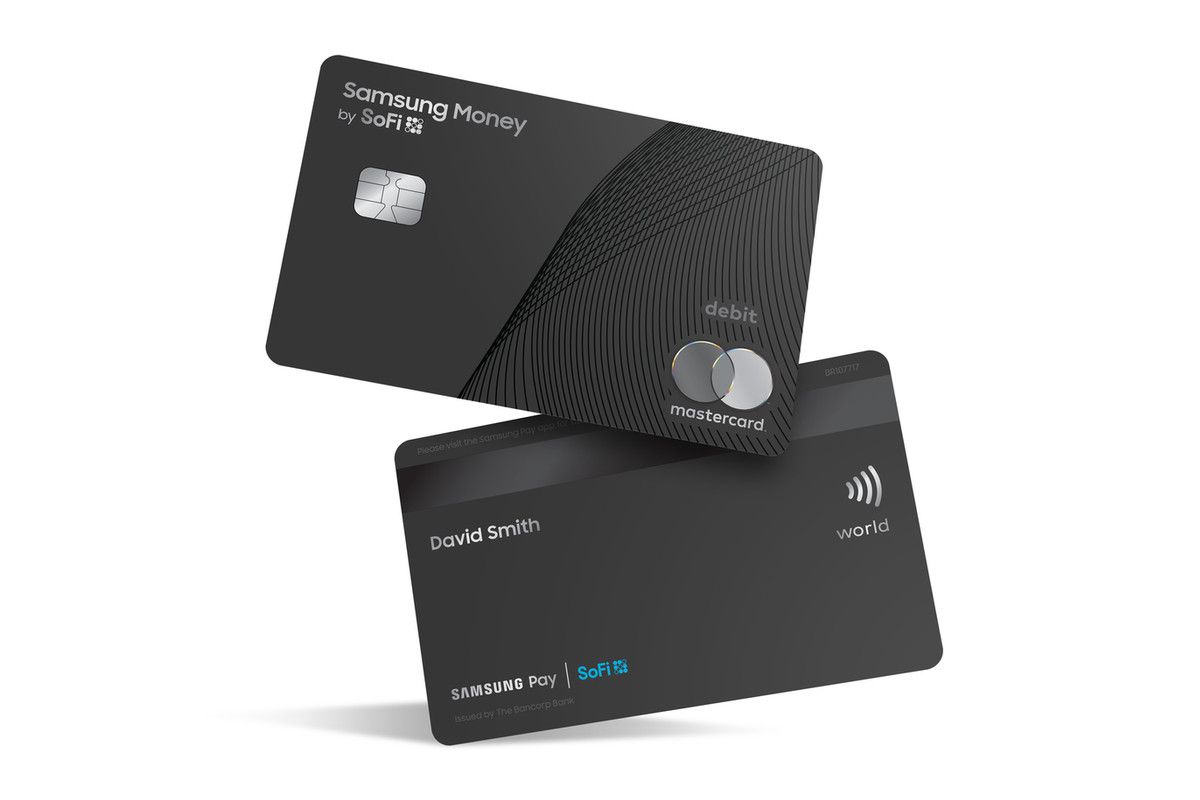
Earlier this month, Samsung revealed it would be releasing a debit card in the coming weeks. The time has come for the full unveiling and that debit card is officially called “Samsung Money by Sofi.” It’s a Mastercard issued by The Bancorp Bank and it ties into Samsung Pay, as expected.

The Samsung Money debit card comes with a cash management account and no account fees and higher interest than the national average. The key here is the Samsung Pay integration, though. Users can apply for the card directly in the Samsung Pay app and they can use it digitally before the physical card arrives. Samsung Pay is where users can check their balance, see a timeline of purchases, freeze the card, and flag charges.

All of that, however, is pretty standard stuff. There are a few Samsung-centric features as well. The Samsung Money debit card earns Samsung Rewards points, which can be redeemed on purchases of Samsung products. The company is also promising that accounts will be FDIC insured for up to $1.5 million, which is 6 times higher than most debit cards. The SoFi partnership also allows Samsung Money users to access 5,000 ATMs in the Allpoint ATM network without any charges.

The card is launching later this summer and people can sign up here for the waitlist.

Via: The Verge

The post [Update: Official] Samsung is planning to offer a debit card this summer appeared first on xda-developers.


from xda-developers https://ift.tt/2SM2u7j
via IFTTT