For anyone who regularly takes photos and videos, cloud storage is essential. There are many platforms to choose from nowadays, but many affordable solutions are lacking features. In contrast,Starchivehas built-in digital asset management — meaning you can easily find and preview your media. Right now, you canget a 1TB lifetime subscription for just $96.99via the XDA Developers Depot.
On desktop and mobile devices, we all use DAM software such as Lightroom or Photos. These apps are packed with useful organization features, from search to tagging. Starchive brings the same technology to the cloud.
As used by Bob Dylan and the New York Philharmonic, this platform uses artificial intelligence to categorize your files automatically. You can also add data manually through custom fields, which then become searchable.
Aimed at creatives, Starchive has placed no limit on uploads of file size. The built-in media player lets you preview files on any device, and you can easily share media via the mobile app.
Starchive is available to download on iOS and Android. You can also access and upload files via any desktop web browser. This deal includes 1TB of storage; if you need any more, it’s just $1 for every additional 50GB.
There’s a lot of reasons to love Sony’s latest true wireless earbuds, the Sony WF-1000XM3. They’re one of the most expensive options out there, but that premium price also gets you one of the best true wireless earbuds you can grab right now, with best-in-class active noise cancellation, 24-bit audio signal processing, up to 24 hours of battery life with the carrying case, and more. But if you’ve been paying attention to the rumor mill these past few weeks, you’d know that a successor, which will presumably be called the Sony WF-1000XM4 following their naming cycle, is coming very soon. A new leak surfaced showing the WF-1000XM4’s external design as well as some specifications.
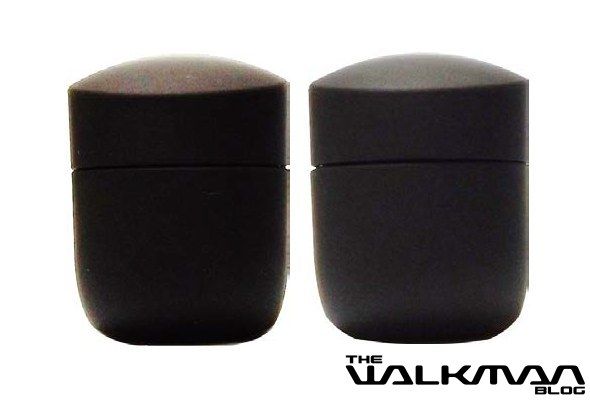
These new leaks come from The Walkman Blog, a site dedicated mostly to Sony audio appliances. Sony WF-1000XM4 is supposed to feature an all-new external design where the differences with its predecessor become immediately clear. Whereas the WF-1000XM3 tried to look slicker, the WF-1000XM4 has a more compact and “sporty” design.
The Sony WF-1000XM4 left and right earbuds, respectively. Image source: The Walkman Blog
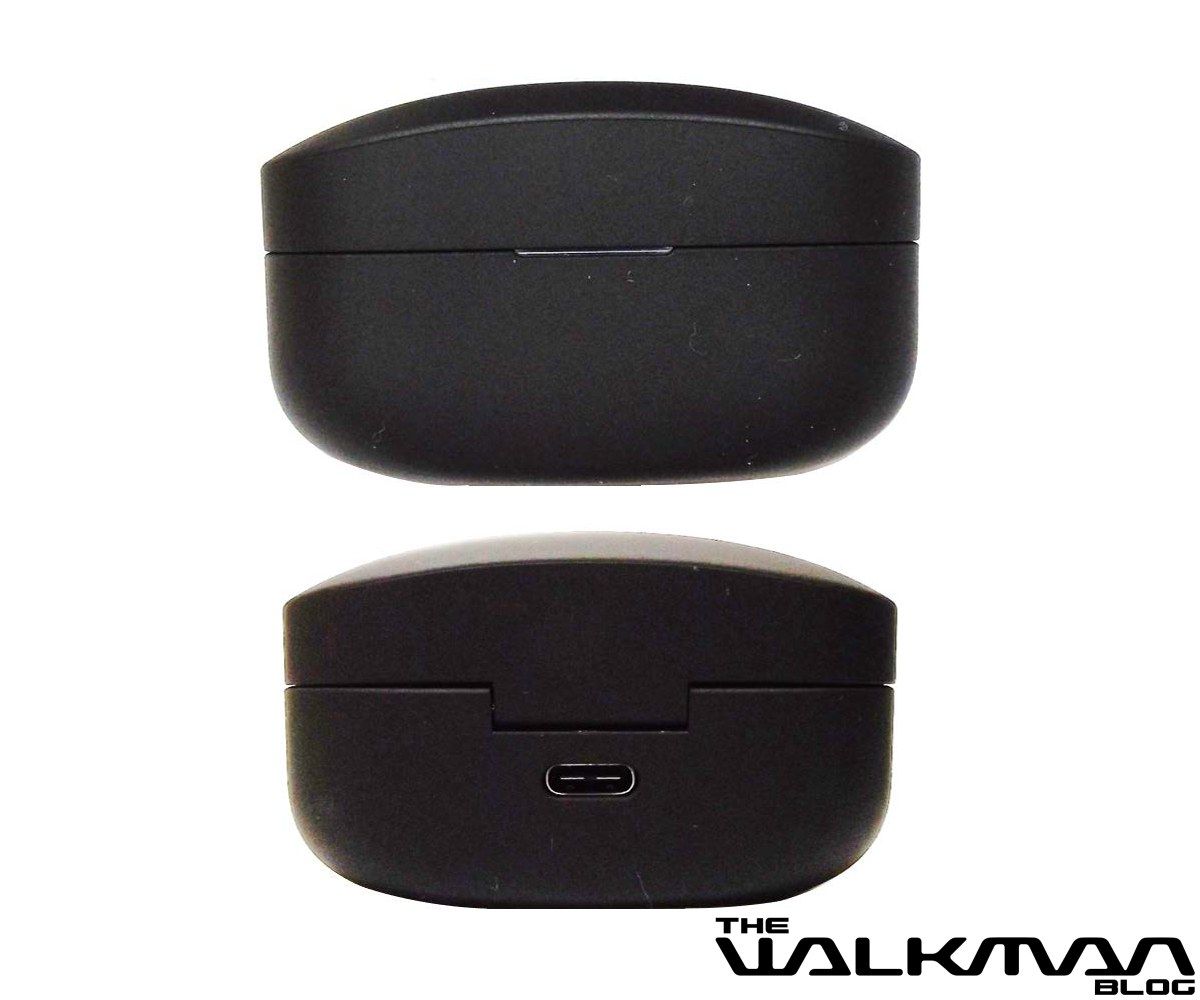
Of course, we already knew that thanks to previous leaks and the design we’re seeing here matches what we saw back then (which reportedly corresponded to the retail box), so it’s pretty safe to say that this design will probably be what ships in the end product. But among other improvements, these earbuds are set to charge faster than their predecessors, as the case’s charging output is seemingly rated at 5V = 140mA.
The Sony WF-1000XM4 charging case. Image source: The Walkman Blog
For context, the WF-1000XM3 are rated at 5V = 120mA and they are already pretty fast, as a 10-minute charge gets you 90 minutes of playtime according to Sony. With these, we might be looking at something closer to 120 minutes of playtime with a 10-minute charge, according to The Walkman Blog. We’ll also probably see support for wireless charging, a feature that is already included on other premium earbuds like Apple’s AirPods Pro.
The Walkman Blog believes that we should see these earbuds launch in early June, as the end date for short-term confidentiality on their FCC listing was moved down to June 9th. If this is anything to go by, then we will see these earbuds come to the market very, very soon.
The new Microsoft Surface Laptop 4 was announced in April with a design similar to its predecessor. Available in either a 13.5-inch or a 15-inch form factor, the laptops have been bumped up to the latest 11th-gen Intel Tiger Lake mobile processors and options for new AMD Surface Edition chipsets that can be configured on both models. Speaking of which, AMD’s Ryzen mobile processors have been doing well, so if you are interested, here are some of the best AMD laptops that you can buy today.
The 13-inch Surface Laptop 4 is a great machine, and it can work unhindered when you are on the go. But if you use the laptop frequently at a fixed desk, one of the best productivity hacks you can invest in is getting a second display. An external monitor will drastically increase your screen real estate, and makes life so much easier, especially if you have to switch between a few apps or tabs all the time. But at the same time, keep in mind that the Surface Laptop 4 doesn’t offer Thunderbolt connectivity which means it cannot connect dual-4K displays at the same time unless you use the Surface Dock. However, the USB-C port natively supports DisplayPort. This means you can either go for a monitor that offers USB-C connectivity or spend a little extra on an adapter. You check out some of the best docks for the Surface Laptop 4 here. This also makes for a perfect setup, especially when a majority of workplaces and schools have adopted a work-from-home or study-from-home environment due to the coronavirus pandemic.
Here are some of the best monitors for Surface Laptop 4:
The HP 24mh is a recommended 24-inch budget monitor that offers a solid set of features for its price. It uses an IPS panel which means better colors and viewing angles and it also offers great sRGB coverage. The monitor also features three inputs (HDMI, DisplayPort, VGA), a functional stand with height, pivot, and tilt adjustment, as well as built-in speakers. Note that since this monitor doesn’t have USB-C input, you would need an adapter or hub for your Surface Laptop 4 to connect this monitor.
Dell makes one of the best monitors around with various models under the 24-inch category. The S2421HN offers an IPS full-HD resolution at a 75Hz refresh rate and AMD FreeSync Adaptive-Sync technology with a 4ms response time. It also comes with a solid-looking industrial design with three-sided slim bezels, while the panel is TÜV-certified which means a flicker-free experience with ComfortView, a feature that reduces harmful blue light emissions. Just like the HP monitor above, this one also doesn’t have a USB-C port either, so you need to rely on a USB-C to HDMI adapter to hook this monitor to your Surface Laptop 4.
The Samsung Business SH850 24-inch monitor is one of the only few options on the market that offers a QHD (2560×1440) resolution, a USB-C input, and a USB hub at this price range. This means that you just need a compatible USB-C cable for quick and easy connectivity to your Surface Laptop 4 without relying on adapters and hubs. According to Samsung. the USB-C port also offers power delivery to your laptop at up to 45W. Additionally, the monitor supports Samsung smartphones with connectivity via DeX. Best of all, Samsung offers a 3-year warranty on this monitor, giving customers plenty of peace of mind.
Moving to the 27-inch category, we have the LG 27QN600-B which offers an IPS panel with QHD (2560 x 1440) resolution along with FreeSync to avoid tearing and reduce stuttering. LG claims that the panel offers 99% coverage of sRGB color gamut and supports HDR10 content for a rich and vivid viewing experience. It does miss out on a USB-C port, but we believe it is still worth it at the asking price.
We recommend the ASUS ProArt 27-inch monitor for creative professionals who require absolute color accuracy for their workflow. The monitor comes with a QHD (2560 x 1440) resolution with IPS 178° wide viewing angle and up to 75Hz refresh rate. It covers 100% sRGB, 100% Rec. 709 wide color gamut and it is Calman Verified with factory calibration for excellent Delta E < 2 color accuracy. On top of that, the monitor comes with USB-C support with 65W Power Delivery and other ports, including DisplayPort, HDMI, and a USB 3.1 hub.
The ASUS ProArt 27-inch monitor is made for photographers and videographers looking for a color accurate panel that can easily hook onto the Surface Laptop 4 using USB-C.
The 27-inch Dell P2720DC offers an excellent viewing experience with a QHD resolution, and a broad port selection including DisplayPort, HDMI, audio line-out, USB-C, and two USB hub ports.
The panel is bright and offers realistic-looking colors while the USB-C port supports Power Delivery which means that it can charge the Surface Laptop 4 via the USB-C connection as well. One can also connect a second monitor to it via DisplayPort, and the Dell Express Daisy-Chaining feature automatically configures Windows’ display settings for an extended dual-monitor setup.
An ultrawide monitor helps you stack multiple windows for a seamless work experience. One of the more affordable options is from LG, the 29WP60G-B. This comes with a 29-inch full-HD (2560 x 1080) IPS panel offering a 21:9 aspect ratio. It covers 99% sRGB color gamut and there is support for HDR10 content as well. Other notable features include AMD FreeSync, three-sided slim borders, standard HDMI, and USB-C for easy connectivity. Do note that the USB-C port doesn’t deliver enough power, so you need to power the Surface Laptop 4 with the bundled charging adapter.
Get the best curved ultrawide experience with the Dell U3818DW 38-inch monitor. Featuring a WQHD+ (3840 x 1600) resolution IPS panel, the monitor comes with 99% sRGB factory calibration for precise color at Delta-E less than 2. In terms of port selection, you get two HDMI, a DisplayPort, a USB-C port, and a USB hub with two upstream and two downstream ports.
These are just some of the best monitors if you have purchased the new Surface Laptop 4. If you haven’t, make sure you check out our quick comparison of the Surface Laptop 4 with the last-gen Surface Pro 7.
Xiaomi’s Mi Mix Fold can be called many things, but “original” cannot be one of them. From the remote control-shaped form factor, to the plastic T-caps that are used to prevent small particles from entering the hinge, to the fact it’s named “Fold,” there are just way too many resemblances to Samsung’s Galaxy Z Fold series.
But if there was one thing that set Xiaomi’s foldable apart from Samsung’s (and any other foldable released so far, for that matter), it was “PC Mode,” which transforms Xiaomi’s MIUI phone interface into a layout that closely resembles a Windows home screen. As a foldable enthusiast and someone who enjoys working on-the-go off portable devices, I was very excited about this feature. In fact, I’ve been baffled by Samsung not having designed such a mode for its Fold series yet. After all, what’s the point of having a larger screen if the UI remains the same as a small phone? Samsung does have Wireless DeX, but that is not on-device for its phones and foldables — it works only when extended to an external display. It is on-device on the Galaxy Tab series, though.
It took longer than expected — PC Mode was inexplicably not available at launch — but it’s finally here courtesy of a software update.
The PC Mode software update for the Xiaomi Mi Mix Fold
Over the past week, Xiaomi pushed a software update (V12.0.10.0.RJTCNXM) that enabled not just PC Mode, but also “Second Space” (which is similar to setting up a second user account on a computer).
Interestingly, the “What’s new” section of the software update page actually downplays the significance of this update: it only mentions “increased system stability” and “reduced system lag,” with no mention of PC Mode or Second Space.
To activate PC Mode, swipe on the large unfolded screen with three fingers inwards from the right edge of the screen (a right-to-left swipe), and the responsiveness is quite good — I’ve launched it at least 25 times now and haven’t experienced any stutters or lag. I was worried about potentially triggering PC Mode by accident, but a three-finger right-to-left swipe from the right edge of the screen seems unique enough.
Xiaomi’s PC Mode: UI overview
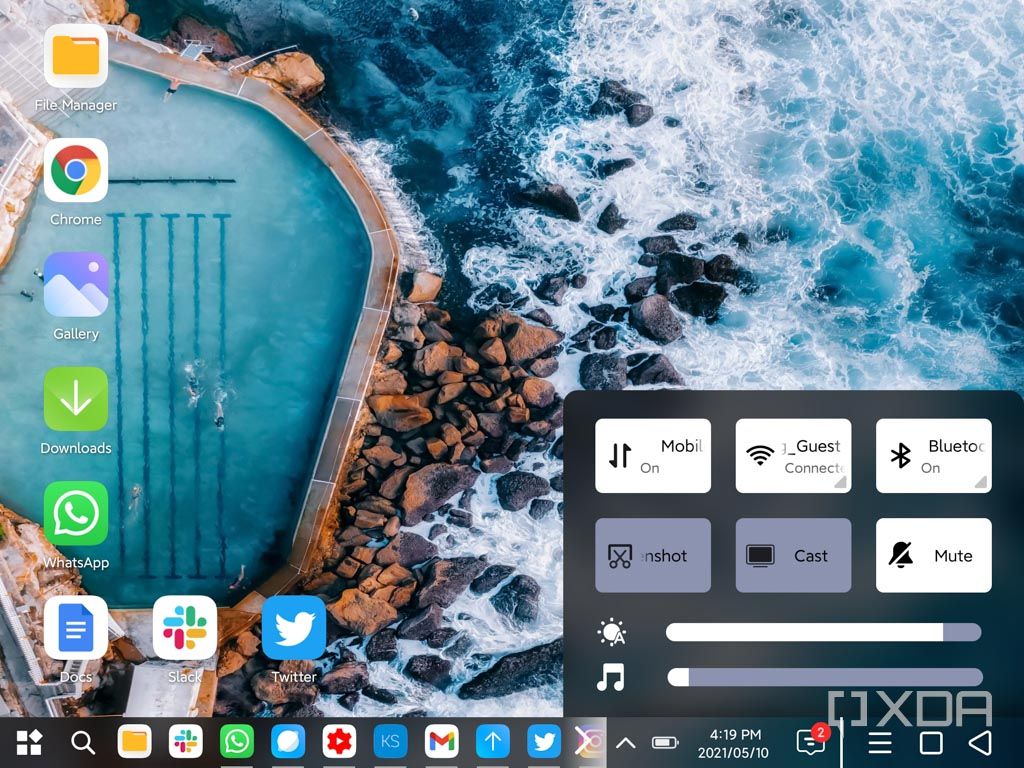
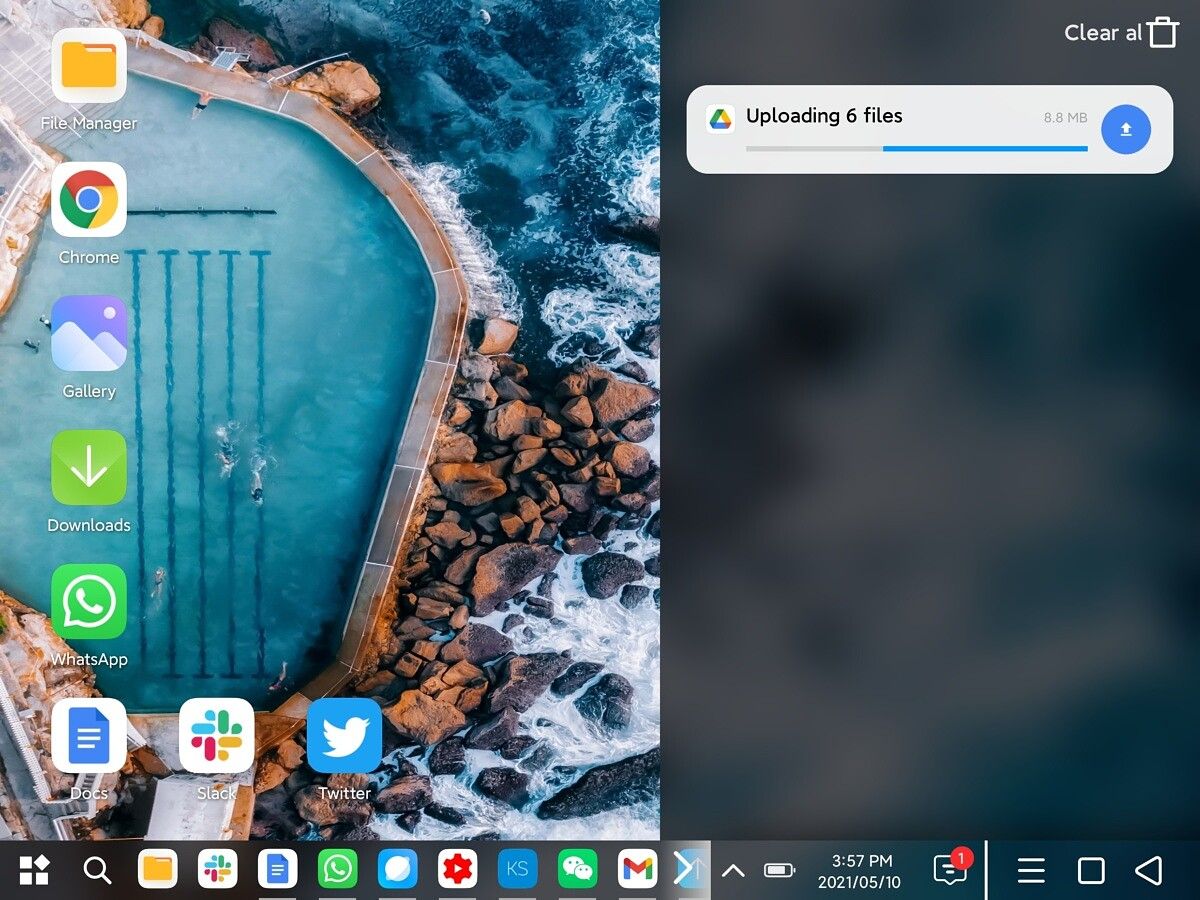
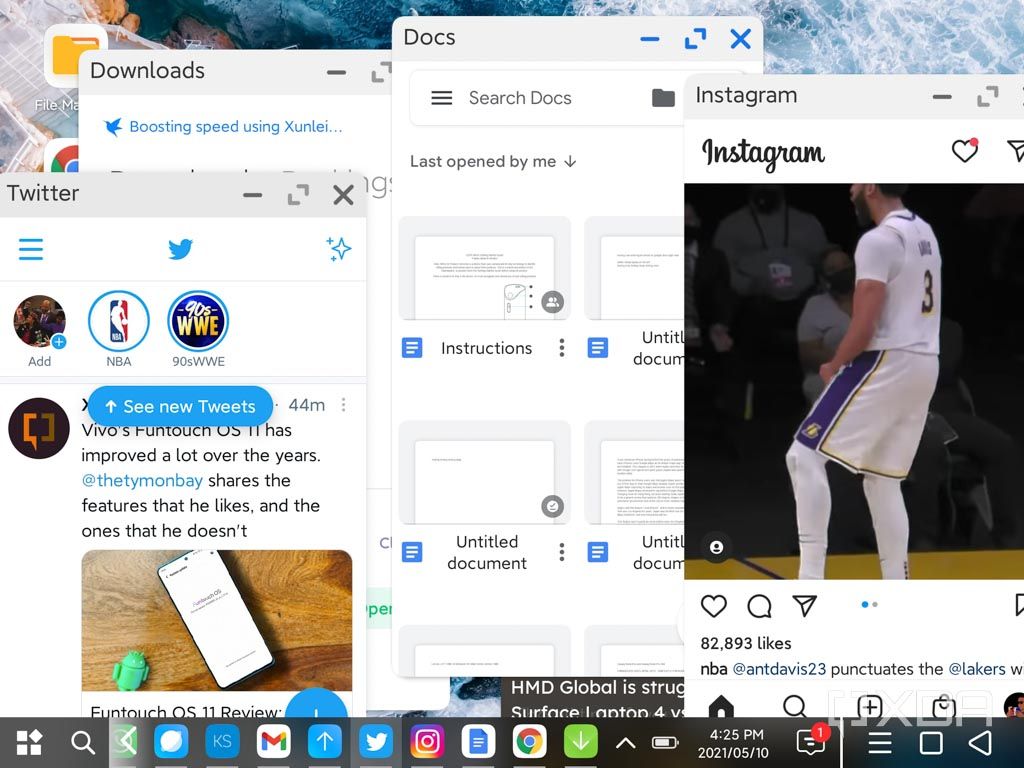
If you’ve used a Windows PC before, you will be familiar with the Mi Mix Fold’s UI in PC mode. You have a menu bar that runs across the bottom of the screen housing, from left to right, a start menu button, search button, a row of running apps, battery indicator, time and date, and notification window button.
The new additions that aren’t from a Windows layout are self-explanatory: there’s an upward arrow next to the battery icon that when tapped brings up the equivalent of Android’s shortcut toggles that are normally housed in the notification panel. To the furthest right of the bar are three buttons that represent Android’s three-button navigation.
Just like on Windows PC, tapping on the time and date section of the taskbar will pop up a full month calendar; tapping on the start menu button in the lower left corner will bring up a vertical row of all the phone’s apps.
Using Android apps in PC Mode on the Mi Mix Fold
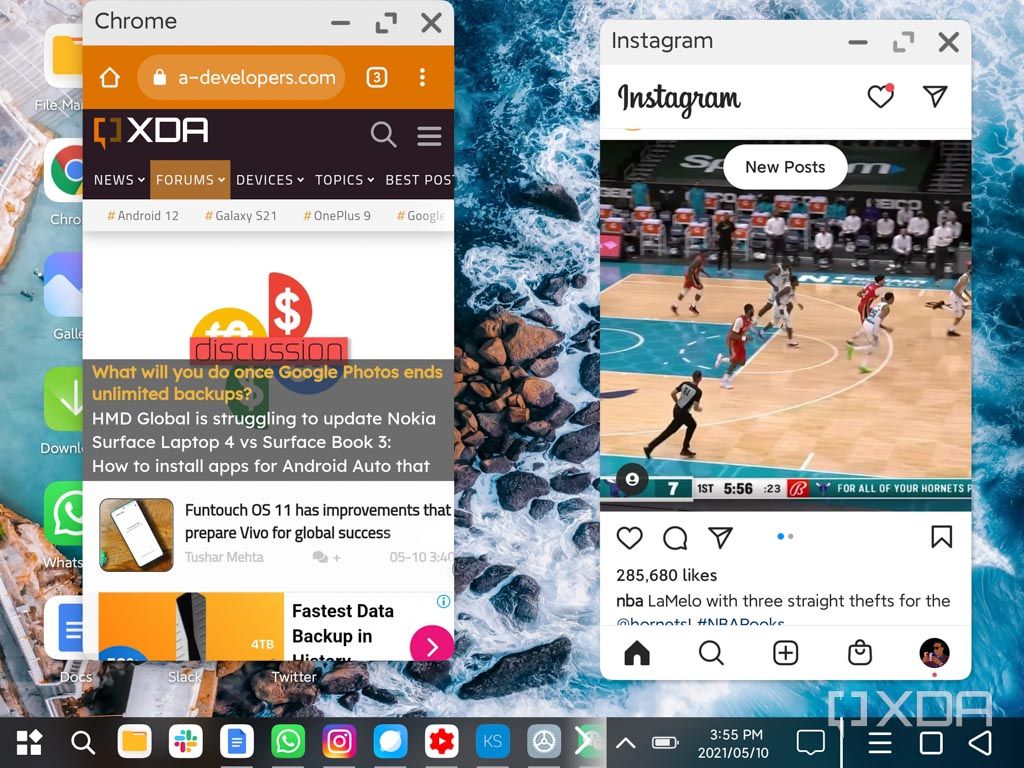
Apps open in PC Mode in a vertical rectangular (aka phone slab) shape, and the Mi Mix Fold supports up to four apps maximum. Try to open another app with four apps running already and the phone will simply close the first app before launching the new one.
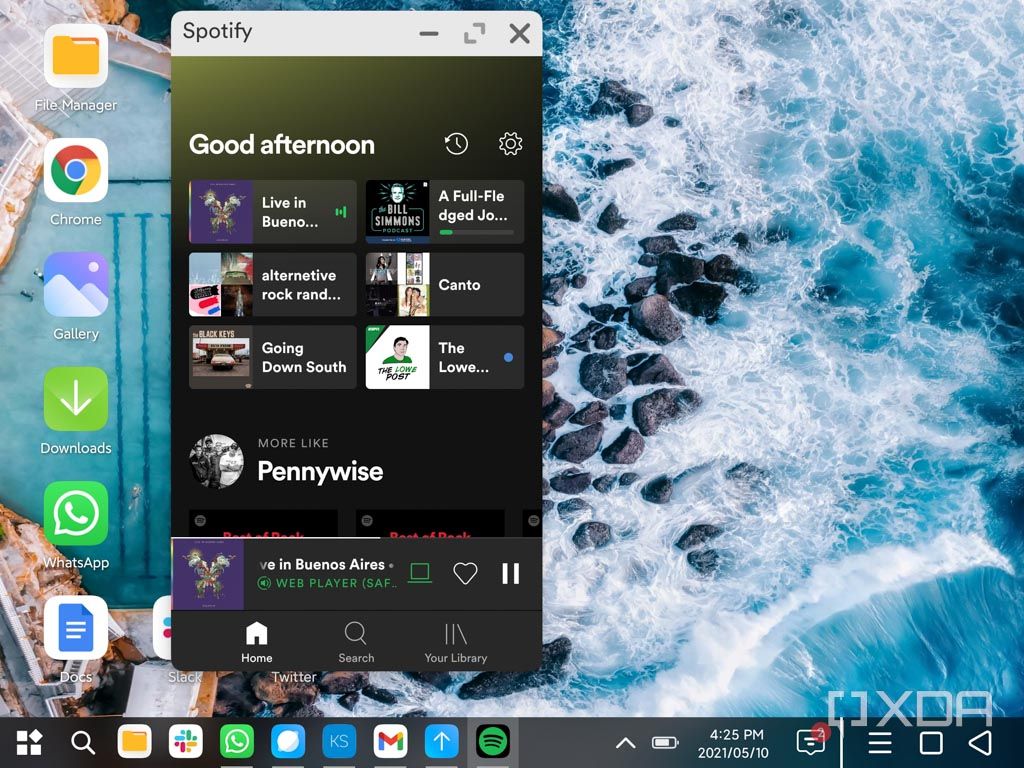
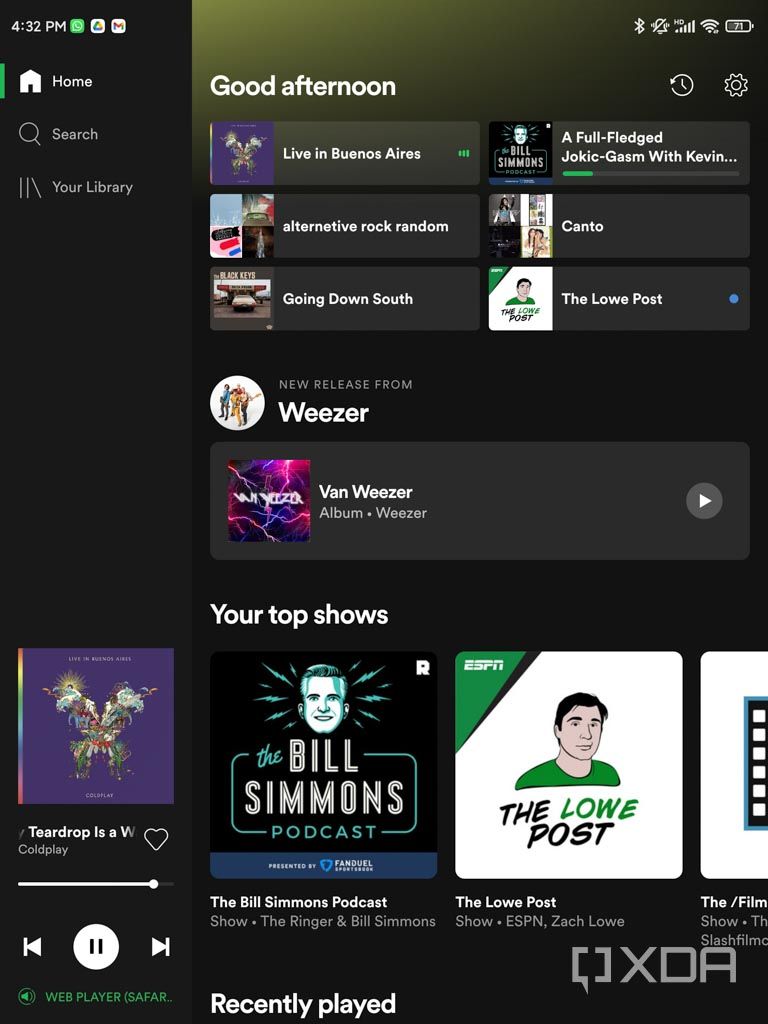
As to be expected, most Android apps aren’t optimized specifically for this desktop-style layout. In fact, some apps are less optimized for PC Mode than without. Spotify in PC Mode, for example, opens in a rectangular smartphone layout instead of the square-ish, multi-paned tablet layout that you get on iPads or even the Mi Mix Fold when it’s not running PC mode.
Some app windows can be resized freely, including YouTube, the Photo Gallery, and Google Docs. Others can either show in rectangular shape or maximized to fill full screen, like Google Chrome. Specific apps like Instagram can only show in rectangular shape and can’t be maximized at all.
Using PC Mode for work
I paired the Xiaomi Mi Mix Fold to a bluetooth keyboard and mouse and everything worked as expected — in fact, I typed part of this article with this setup. Both Google Docs and WordPress via Chrome worked without issues — although I do find apps don’t launch as zippily as they do in regular phone mode. It’s not slow per se, it’s just no longer at super-fast 2021 flagship speeds.
I enjoyed being able to open a second window on the fly to fact-check or respond to WhatsApp messages directly while keeping my main WordPress window open. However, the 8-inch screen is ultimately a bit cramped for real extended work sessions.
The good news is the Mi Mix Fold can cast wirelessly to a smart TV — there is an option to do so in the shortcut toggles. However, I don’t have a smart TV so I have not tested it. Wireless casting seems to be the only way, as plugging in a USB-C or HDMI cable (via a dongle) to an external monitor doesn’t seem to work.
PC Mode is a good start and should be essential in the future
Is the Mi Mix Fold’s PC Mode in its current form a game changer for me, someone who sometimes work off a phone at coffee shops? No. As I said, the screen is a bit cramped in this layout, and even Xiaomi’s MIUI, in standard phone UI mode, already has a robust multi-tasking system that allows for floating app windows. So it’s not like it made the Mi Mix Fold a much better work machine than it was before.
But Xiaomi’s inclusion of such a feature is still a great thing. In the future, when foldable phones presumably get bigger (either via a tri-fold form factor or maybe a rollable) to say, 10-inch or 11-inch screens, I can see having a desktop layout to come in very handy. Also, now that Xiaomi has introduced PC Mode for its foldable, the pressure is on Samsung to implement a similar on-device DeX setup to the Galaxy Z Fold 3.
In fact, I’m willing to bet that Samsung will include it, just like I’m lowkey confident Samsung will also put a Periscope zoom lens into the Galaxy Z Fold 3 since Huawei successfully pulled it off with the Mate X2.
These brands are all watching each other’s work and there’s no way Samsung’s going to sit idle as Huawei and Xiaomi introduce new features to foldable phones. Like I always say, when brands compete, we as consumers win.
Google recently released the Gboard app on Wear OS, making it easier for users to type on their smartwatch. Like the Android version, Gboard for Wear OS offers multiple input methods, an integrated emoji palette, and multi-language support. The app also offers a new preview screen, featuring smart suggestions and corrections. Along with these features, Gboard for Wear OS also brings a redesigned lockscreen PIN keypad.
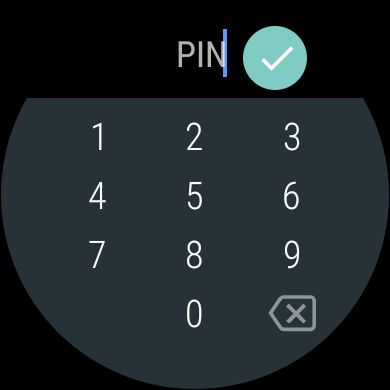
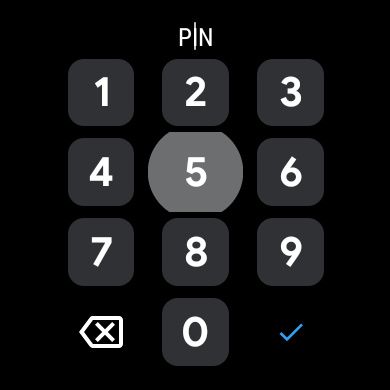
As per a recent report from 9to5Google, the new Gboard lockscreen PIN keypad offers improved spacing for the 0-9 keys, a smaller preview window, and repositioned backspace/enter keys. Since the layout is now more spacious, users will be able to easily enter their PIN without making any annoying typos.
Furthermore, the Gboard keypad features a new animation for keypresses. Instead of a pop-up that covered the preview screen, the new keypad shows a circular highlight around the key you press. Check out the new animation in the screenshots attached below.
It’s worth noting that all keyboards and number pads across Wear OS have been moved over from the generic “Google Keyboard” to Gboard. So you should see this new layout in other parts of the OS as well. If you like the new layout, you can download the Gboard app on your Wear OS smartwatch by heading over to the My apps section of the wearable Play Store.
The latest version of Xiaomi’s custom Android skin – MIUI 12.5 – is finally here. The first incremental update over MIUI 12 has been unveiled at the Mi 11 launch event in China. Compared to MIUI 12, the stable version of which was released less than six months ago, MIUI 12.5 brings in a slew of improvements, visual overhauls, and a handful of new features. We have already extracted the new live wallpapers, and now we are presenting the downloading links of the first set of MIUI 12.5 beta firmware packages for a bunch of Xiaomi, Redmi, and POCO devices.
It is worth mentioning that these closed beta builds are meant for the Chinese variants, as Xiaomi suspended the rollout of MIUI global beta last year. As a consequence, you have to flash these recovery ROMs using TWRP to bypass the MIUI beta account whitelisting. Do not expect Google Play Services or any pre-installed Google apps in them. Language options are likely limited to English and Chinese only, too. Xiaomi has yet to launch MIUI 12.5 globally. Meanwhile, you can try out the closed betas from China.
The beta MIUI 12.5 builds listed below are based on either Android 10 or Android 11, depending on the device. If you are looking for MIUI 12 stable releases, you can find those here.
Download: MIUI 12.5
You can download the latest beta of MIUI 12.5 for your device from the links below. You can also visit our linked forums in case you need further assistance. While all of these download links are directly from Xiaomi, users are advised to proceed at their own risk. We warn you once again, this is not intended for the average consumer and is recommended only for users comfortable with flashing ROMs.